My policies are grounded in the listening I do with you in our community. I believe policy should be practical and flow from what makes life better and easier for you.
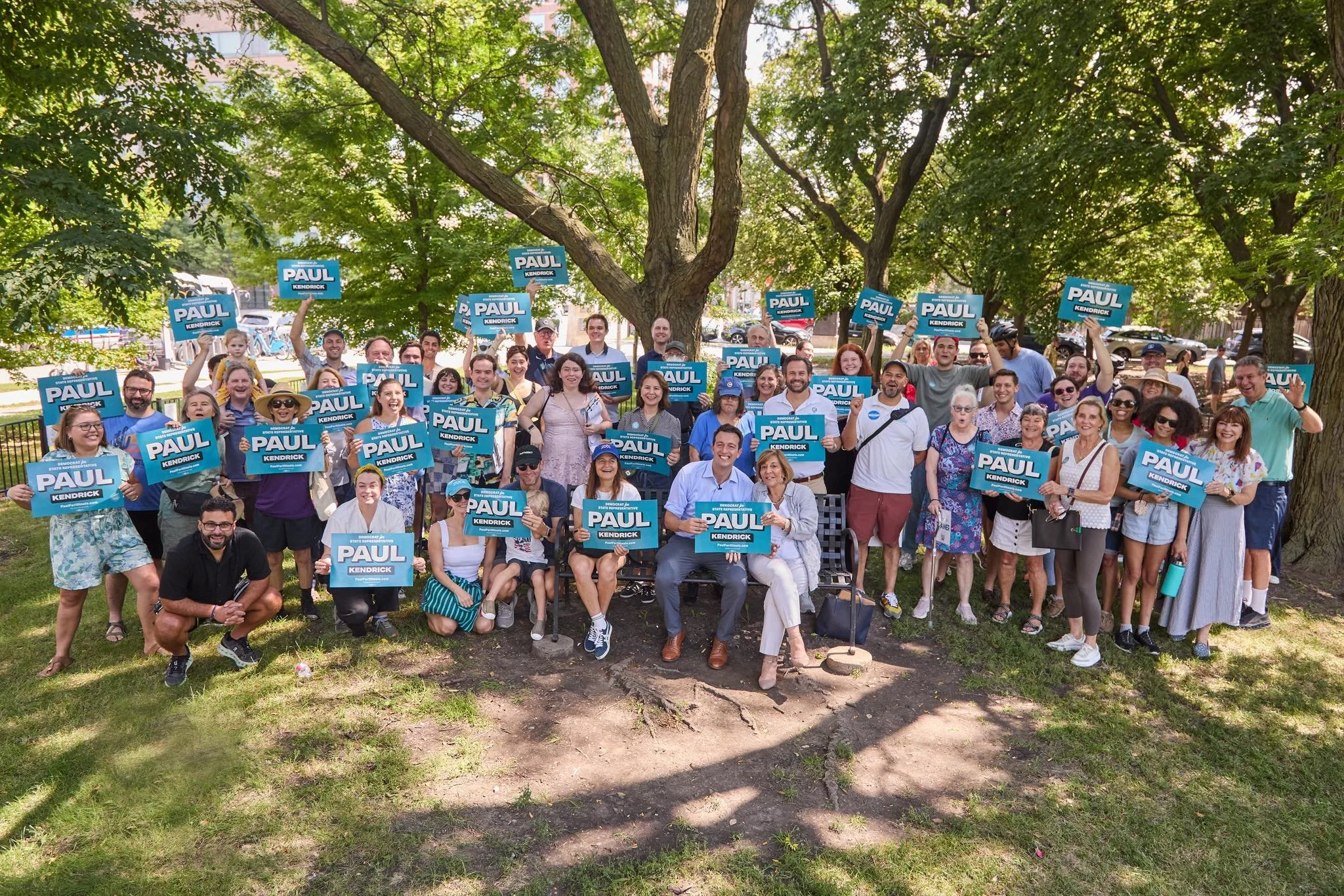
The best ideas don’t come from Springfield; they come from the people living in our communities every day. That’s why, on day one, I will establish local advisory councils on key issues, such as small business, public safety, education, and housing, to address the needs of the 12th District. These councils will bring together the best of the 12th district—community members, local leaders, and subject matter experts—to ensure I stay grounded in the needs of our neighborhoods. This approach ensures ongoing dialogue and accountability, not just election-year promises.
Listening is the first step to leading effectively, and advisory councils will help ensure your voice is always at the table. Our community deserves a representative who doesn’t just talk at people, but listens and works with them.
Above all, I believe government should listen first, spend wisely, and always put people—not special interests—at the center of decision-making.
From all I’ve done to provide opportunities for young people and build economically thriving communities, my focus is on how our state both protects our fundamental rights and how we get a better deal in Chicago. I want neighbors to be able to remain in this community we love, contributing to it, getting ahead, and living the Chicago dream. Here’s how we do it:
-
Every family deserves to feel safe in their home, on their block, and in their city. Safety is a city’s foundation. I will focus on improving it so residents are safe walking in the neighborhood they love.
I believe in a common-sense two-step approach to keep us safe: locking up criminals who hurt innocent people while treating those in the justice system dealing with poverty, substance addiction, mental illness, and education for second chances and brighter futures. We must support housing, mental health care, and education to change the root causes of crime. When we become a city that addresses the problems that lead to crime, we will be safer over time. We must pair real criminal justice solutions with the opportunity of good jobs and high-quality schools. My plan:
Stop chronic retail theft: People continue being hurt and worse in incidents of retail theft. I’ll take on the criminal networks that are harming working people, closing small businesses, putting products behind glass, and making neighborhoods unsafe. We cannot continue our current revolving-door approach. I will introduce legislation to create a classification for these criminal networks that are taking advantage of a misdemeanor status to fence stolen goods. The State’s Attorney should be allowed to present evidence to a judge of someone being arrested for this many times to consider it a detainable offense. This would allow judges a more accurate assessment of the threat criminal networks pose to the public, thereby preventing further crimes. We should also increase youth diversion funding to prevent those who made a mistake from repeating it. Second chances and support matter when there are issues of poverty, mental health, and substance abuse that we can better support. But organized retail thrift rings doing premeditated criminal acts, destroying small businesses, need to be stopped. Chronic retail theft is about criminal networks who we see doing this 10 times a month without being held to common-sense reprimand. We need to look out for small businesses and stop the smash-and-grabs and policy chases before they happen.
Recruit and add officers: The Chicago Police Department is down 2,000 officers. I will incentivize partnerships with educational and community institutions to enhance recruitment strategies that fill their needs.
Modern technology should be used to keep Illinoisans safe, and license plate readers (LPRs) and POD cameras are some of the most effective public safety tools we have. These systems help police track vehicles involved in crimes and provide real-time evidence that can lead to arrests. We’ve already seen them at work here in Chicago’s 18th and 19th police districts: when a tragic shooting happened earlier this year in southeast Lakeview, LPRs tracked the suspect vehicle miles away, giving police crucial information they needed to respond. Expanding these systems statewide can prevent crimes, solve cases, and bring peace of mind to families. I will support the rollout of these 21st-century tools while also ensuring they are deployed fairly and transparently. Public safety depends on both effective policing and community trust, and I will fight for both.
Innovative Training: I will fight for the training to equip police with the most effective strategies. We must use data in smart ways to stop crime. Effective data use means more effective crime prevention, quicker response times, and better use of taxpayer dollars. I will work to ensure that our state police are equipped and organized to keep Illinois safe.
Violence Intervention: We know that policing alone cannot solve the root causes of violence. That’s why I will work to expand statewide violence intervention programs that identify people at risk, connect them with mentors, job training, and counseling, and provide alternatives to violence. These programs have been shown to reduce violence and save lives in neighborhoods where they are implemented. By addressing the underlying issues—poverty, lack of opportunity, and trauma—we can prevent violence before it starts. Intervention programs are cost-effective, humane, and proven to work. Investing in them is investing in the safety and future of our communities.
Keeping guns off our streets: Illinois must be more aggressive in taking on gun manufacturers and networks that traffic guns into Chicago.
Mental Health Programs: Improve our state’s mental health programs. Too many families struggle to find affordable, accessible services, and too often untreated mental illness can lead to addiction, cycles of violence, and incarceration. I will fight to expand funding for counseling, Illinois municipalities’ crisis response teams, and school-based programs so that Illinoisans can receive help before problems escalate. Our state should also be investing in mental health support for first responders, who often carry trauma from the work they do every day. Expanding access to care is not just the compassionate thing to do—it’s also smart public safety policy. When people get the care they need, our communities are safer, healthier, and more resilient. Illinois should be a leader in treating mental health as health care.
Every Illinoisan deserves safe streets, whether they’re walking, biking, or driving. I will support lowering driving speeds on state roads where possible, because reducing speed is proven to save lives. I will also back the strategic use of automated enforcement such as speed cameras, which have been proven to deter dangerous driving. These cameras also generate revenue that can fund vital public services, while freeing up Illinois State Police officers to focus on tackling violent crime instead of routine traffic stops. Safer roads mean fewer tragedies and more livable neighborhoods. Families should not have to fear crossing the street or biking to school. By prioritizing pedestrian and traffic safety, we can protect lives and create communities that are easier to move around in.
When crimes happen, video footage is often the most powerful tool law enforcement has to solve cases quickly and fairly. Years ago, Chicago offered a camera rebate program that helped residents and businesses install their own security cameras, but that program was discontinued. I believe we should not only bring it back, but expand it statewide. By making cameras more affordable for families and businesses, we can help police gather evidence, hold offenders accountable, and deter future crimes. This is not about surveillance—it’s about giving communities the tools to keep themselves safe and giving police the resources they need to do their jobs well. I will work to restore and improve this program so that every neighborhood can benefit.
Time is critical when a crime happens, and investigators need to know where to turn for evidence quickly. In Chicago, residents and businesses can voluntarily register their cameras in a database that provides detectives with contact information, camera locations, and directions they face. This system does not allow police to access your footage directly—it simply makes it easier for them to know who to contact when they’re investigating a crime. Illinois does not have this tool at the state level, and that’s a missed opportunity. I will fight to create a statewide voluntary registry so that local police can solve crimes faster and more efficiently. This is about smart policing, not overreach. With better coordination, we can make our neighborhoods safer while respecting privacy and civil liberties.
Homelessness is a challenge we cannot ignore, and the solutions require both compassion and investment. Too often, people experiencing homelessness are left with no stable place to sleep and no clear path to recovery. I will work to expand single-room occupancy shelters across the state and fund more outreach teams to connect people with essential services. Just as importantly, I support new stabilized housing facilities, especially here in Chicago where they are needed. These facilities would not only provide temporary places to stay but also offer on-site access to employment services, health care, and social supports. These programs are being piloted near our district at the Haven on Lincoln, a new 40-unit stabilized housing facility that makes use of the vacant Diplomat Motel in Lincoln Square. Homelessness is not inevitable—it’s the result of policy choices. By investing in stability and dignity, we can help people get back on their feet and build stronger, safer communities for everyone.
Illinois Crime Victims Compensation Program: No one who has suffered the trauma of violent crime should be left worrying about how to pay their bills. Illinois has a Crime Victims Compensation Program that is meant to cover expenses like medical care, funeral costs, lost wages, and mental health services, with potential awards of up to $45,000. But in reality, the program often only pays out a fraction of available funds, and far too many families wait months or even years before they receive any help. That is unacceptable when people need support immediately. I will push to strengthen this program, reduce red tape, and make sure victims receive the full, timely compensation they deserve. Victims of crime should not be revictimized by bureaucracy. Our state has the resources to do better, and I will fight to make sure we do.
Expansion of Anti-Recidivism Programs: When people leave prison, they should have the chance to succeed and rebuild their lives. Unfortunately, a top predictor of whether someone will reoffend is whether they can find employment in their first year of release. I will fight to expand education programs, vocational training, and workforce development that prepare people for real jobs after incarceration. Programs like Sweet Beginnings—a West Side business that employs returning citizens to make honey and skincare products—prove that second chances work, particularly when we partner with our local business community to affect change. These programs reduce recidivism, strengthen families, and add to our economy by turning potential costs into contributors. Every dollar we invest in rehabilitation saves many more down the line in policing, courts, and prisons. Building pathways for returning citizens is both the right thing to do and the smart thing to do for Illinois.
-
Between property taxes, groceries, health, child care, and so many costs today, it’s become too hard to afford daily needs. I will pursue every possible avenue to reduce costs for you.
Bringing Down Property Taxes
I will fight a property tax system that’s fair and transparent: we should understand how our taxes are calculated and be able to stay in our communities. By working to improve how our businesses are doing, we can shift the burden back away from homeowners, while demanding that the government is more efficient and effective, and what it is asking us to pay, so we bring these bills down, and we are confident in what we’re paying.
Senior/Veteran/Disability Tax Relief: I will continue to raise income thresholds for the Senior Freeze to reflect today’s costs of living, create a tax relief program for seniors with high medical expenses, and increase exemption amounts for seniors, veterans, and people with disabilities. Just as important, we’ll move to automatic or simple opt-in “check-the-box” renewal wherever legally possible, and fund community-based outreach in senior facilities and communities across Illinois. Hence, people actually receive the relief to which they are entitled.
Stopping Sharp Rises in Property Taxes
Other states cushion homeowners against sharp increases with stronger homestead exemptions, phased-in reassessments, tethering better to what a house was bought for, and caps on year-over-year assessment growth. Illinois should adopt a balanced approach to these tools: expand the general homestead exemption statewide, phase in extensive assessment increases to avoid tax “whiplash,” and pass a reasonable cap on annual taxable value growth.
Receiving Property Taxes On Time
Homeowners deserve predictable property tax information without the drama or delays. I commit to partnering with other levels of government, such as our local Assessor, Clerk, Treasurer, and County Board, to deliver early, transparent tax estimates with significant time to spare before final bills, so that families can plan their budgets with confidence. Instead of pointing fingers, we’ll align on solutions: a shared data standard and utilizing state resources for technology to expedite evaluations, providing estimated ranges in advance when possible. I’ll push for using the State’s administrative capacity to enhance online tools, such as a dashboard and opt-in text/email alerts, that notify residents at key milestones (assessment, appeals window, tax-rate setting, and finalization). This isn’t about making levels of government work together to get taxpayers the information they need, when they need it.
Making Relief Easy to Understand and Use
Even good programs fail if residents can’t find or navigate them. I will require plain-language notices on every tax bill showing estimated eligibility for state and local relief, create a one-stop statewide application that pre-populates from prior filings, and work with State of Illinois departments to publish an online “relief dashboard” so taxpayers can track when their credit or refund is issued. We’ll also conduct a top-to-bottom audit of local fees added to property tax bills to identify hidden costs. Senior freeze enrollment should be the default enrollment instead of requiring registration every year. And the caps should automatically rise with inflation and be adjusted for the number of people in a household. The goal is simple: put more money back in family budgets, quickly and predictably.
Housing
Chicago and communities across Illinois face a housing shortage that drives up costs and squeezes working families. I believe in a thoughtfulness that balances preserving the historic beauty we love with incorporating new elements into Transit-Oriented Development. We need creative solutions that expand supply while keeping our neighborhoods livable. That’s why I support legalizing Accessory Dwelling Units (ADUs) along with other key reforms, such as multi-family housing statewide, which would give families the flexibility to add affordable apartments, like in-law suites or coach houses, without altering the character of their blocks. I will also push for expanded homeless outreach and stabilized housing programs so people in crisis can get the dignity, support, and services they need to get back on their feet. I believe the continued rise of property taxes is driving people from the neighborhoods they love, and this issue must be addressed. Everyone deserves a safe and affordable place to call home.
ADU Legalization
Illinois is facing a housing shortage, and we need creative, community-friendly solutions. Accessory Dwelling Units (ADUs)—such as basement and attic apartments, or coach houses—allow homeowners to add housing and generate income without altering the character of neighborhoods. I will fight to legalize ADUs statewide so that families can create affordable rental options, and homeowners can benefit from extra income. This is one of the most cost-effective ways to increase supply, reduce housing costs for both renters and homeowners, and give seniors or young adults more options for living in our communities. We also must increase transit-oriented developments. With smart policy, we can make housing more accessible and affordable for everyone.
Cutting Red Tape
We must speed up permitting processes. I will introduce grant programs that incentivize the Chicago government to expedite project review times, which are currently excessively long, whether that involves implementing new technology or process improvements. A community process is important to hear people’s voices on potentially improving, but whether or not a project is approved, the city’s timelines are unacceptable compared to other markets and require change spurred by the state. Projects that hit certain sustainability and affordability standards can have their environmental review expedited.
More housing means lower costs.
The Missing Middle Housing Act is legislation I want to help pass to create more units at various price points, allowing middle-class individuals to stay in our community. We can also expand rent-to-own programs to give more people the opportunity to become homeowners. We also need to add more multi-family buildings.
Another way to add housing is incentives for adding factory-built homes, which gets units to market faster.
The state should incentivize projects with cost-saving building strategies that provide middle-class housing.
I will also protect and build on the state's medically vulnerable renter assistance and rental preservation programs.
Child care
Increasing child care is vital to parents. I will push to expand the Child Care Assistance Program that helps low-income families, providing more relief to working families earning up to 200% of the area median income, given how child care remains a significant challenge for them. We should also raise reimbursement rates to ensure local child care options can stay in business. I will provide oversight of the new start Department of Early Childhood to ensure it’s implemented well and gives parents clear options. New tax incentives for sponsored care would allow for more options on-site of larger employers, making parents’ lives easier. We can offer low-interest loans and grants to encourage the establishment of child care programs, particularly to address the capital challenges of starting one. I support providing training to help in the business and regulations in doing so, as well as making pathways into these careers more straightforward.
Health Care
Illinois is set to lose an estimated $48B in Medicaid funds over the next decade. I will work to keep our hospitals open and ensure that patients receive the care they need and deserve. This will take creativity and knowledge of the federal government, which I have from serving in the Obama Administration, to navigate the rules targeting us. Ensuring that people receive the care they need at lower costs is a top priority for the upcoming term. This also means stronger state oversight of prescription drug prices.
-
We must protect our fundamental rights from attacks by the Federal Government. That means:
Safeguarding reproductive care: We need to expand access to abortion care, knowing the demand coming from other states, while protecting the data of patients and all those who provide care. I will move to protect Mifepristone access in this state, knowing the Trump Administration is coming for it.
I will sponsor and advocate for legislation that protects and expands access to reproductive health services such as contraception, while ensuring state budgets and programs allocate funding to clinics, particularly for underserved communities. I will support family planning services at federally qualified health centers and expand eligibility for these services through the federal 90% Medicaid match. We must also expand Illinois’ Shield Law, which protects abortion providers and patients who support someone from a state where abortion is banned, so that volunteers, drivers, and friends or family helping someone obtain care are all safe from the federal government and other states. We can move away from the medical professional's name being on prescriptions and treatments, and instead list the provider so individual safety is not jeopardized.
Protect LGBTQ+ community: At a time when the federal administration is weaponizing health care reimbursements for political reasons, we must be creative in how we safeguard LGBTQ+ health care. We also need stronger data privacy on LGBTQ+ health, such as for transgender people who have transitioned. I will increase access PrEP, PEP, and other HIV medications, and support Illinois’ Getting to Zero initiative to end the HIV epidemic in Illinois by 2030.
Outlaw insurance companies using HIV treatment and prevention for prior authorization so that people get the care they need.
Stopping ICE: ICE’s profiling and cruelty are unacceptable, so I will be dogged in every way we can protect our neighbors. Working with immigrant advocates, I will continue push every legal avenue to protect people.
-
Illinois can only meet its challenges if we focus on our future, budget responsibly and govern transparently.
We need forward-thinking leaders to craft and advance policies that help build responsible, inclusive, and scalable industries for the next generation, providing them with financial stability to buy homes, have kids, pay for school, save for retirement, and anchor a fiscally-sound city.
For too many families in Illinois, rising costs and stagnant wages have made the American Dream feel out of reach. Young people today face the dual pressures of unaffordable housing, student debt, and a rapidly changing job market. A sound economic policy isn’t just about numbers, it’s about opportunity. Good economics means attracting businesses, creating quality jobs, increasing tax revenue without raising rates, lowering the overall cost of living, and giving every Illinois family a fair shot at prosperity. I believe Illinois should be a place where young people can build careers here, raise families here, and know that the next generation will have more opportunity than the last.
By equipping residents with the skills employers need and making Illinois a magnet for innovation and investment, we can expand employment opportunities across the state and increase economic mobility. Investing in talent and strategic partnerships isn’t just smart policy, it’s fundamental to restoring affordability, growth, and hope for future generations.I will stand up for fiscal responsibility in this state. Illinois cannot squeeze every last dollar from residents. We must grow, make effective investments, and live within our means so our children can shape our state’s future.
Big corporations pay their fair share through measures like a digital advertising tax, while protecting working families from unnecessary burdens.
It also means modernizing our outdated licensing rules to make it easier for people to enter and advance in their careers.
Growth: Illinois must grow its way out of budget issues rather than pushing residents to pay higher taxes, especially property taxes. Growth is necessary for Illinois to generate the tax revenue it needs. I will advance policies that cut unnecessary red tape and incentivize hiring, so companies can grow and relocate here with a business climate that fosters thriving opportunities, creating jobs for working people. By adding housing where appropriate, we can accommodate more residents and better distribute the tax burden, easing the pressure on a population that is struggling to stay in the communities they love.
Winning future industries: Illinois must aggressively seize opportunities in areas like advanced manufacturing, robotics, biotech and life sciences, and AI and automation that will allow our state to thrive.
Create Talent Pipelines for Emerging Industries: Prepare our kids for the jobs of tomorrow by modernizing K–12 education with a focus on science, technology, engineering, arts, and mathematics (STEAM), as well as computer science and digital literacy. Focus on expanding education opportunities and career pathways in AI, robotics, automation, cybersecurity, healthcare and life sciences, renewable energy and sustainability, quantum computing, and advanced manufacturing (fields poised for job growth in Illinois and nationwide). Promote industry-aligned certification programs and apprenticeship pathways that give students and career changers real skills that translate directly into quality, in-demand jobs.
Supporting Small Businesses: I will expand the Main Streets program to Chicago, an Illinois program that has helped small businesses open in downstate towns that need them. We must improve the business climate in Illinois so businesses can open, grow, and create opportunity. The small companies of the 12th district are vital to what we love about our neighborhoods, and we don’t want to see storefront vacancies. We need companies, including those choosing Chicago and our homegrown ones, to be able to add to their payroll and create opportunities for our residents.
Occupational Licensing Reform: licensing should protect consumers and ensure high standards—but in Illinois, too many licensing rules are outdated and burdensome. Some require hundreds or even thousands of hours of training for routine jobs, keeping people from entering the workforce and slowing down our economy. I will push for a comprehensive audit of all state licenses to update requirements, eliminate unnecessary red tape, and make sure standards are aligned with today’s needs. This will make it easier for people to start careers and businesses, while still protecting public safety. A fair, modern licensing system helps workers, strengthens small companies, and boosts our economy. Illinois can’t afford to hold back talent with rules that don’t make sense anymore.
Develop Public-Private Partnerships: Partner with some of Illinois’s largest employers and innovative companies to collaborate on workforce development, internships, apprenticeships, and on-the-job training. Build support and collaborative programming with organizations such as the Illinois Economic Development Corporation (Illinois EDC), the statewide economic development organization focused on attracting new businesses, jobs, and investment to Illinois, and regional partners like World Business Chicago, which drives inclusive growth and corporate expansion in key sectors like life sciences, manufacturing, and tech. Champion innovation hubs and tech incubators like 1871, Chicago’s globally recognized startup ecosystem that supports hundreds of early stage and growth companies, connects founders with mentors and corporate partners, and helps generate new jobs and capital in the region’s tech economy.
Leverage Educational Institutions: Deepen and expand partnerships with local universities and colleges, including UIC, Loyola, DePaul, Northwestern, City Colleges of Chicago, and our regional universities to build education-to-career pathways in emerging sectors like AI, robotics, automation, cybersecurity, life sciences, and advanced manufacturing. Encourage colleges and universities to design industry-led curricula that prepare students with the skills employers actually need, bringing employers to the table to help develop courses, offer real-world projects, and teach or guest lecture alongside faculty.
Prioritize Inclusive Growth: Ensure economic development efforts benefit residents from every community in Illinois — from urban neighborhoods to suburban towns and rural counties — by coordinating workforce development programs and resources across all regions of Illinois. Promote equitable access to economic opportunity by supporting programs that train workers in underserved and historically excluded communities, ensuring that good paying, in demand jobs in sectors like technology, advanced manufacturing, and healthcare are genuinely accessible to people regardless of ZIP code or background. Champion employer-led community workforce programs, such as Hire360, that build diverse talent pipelines and provide paid work experience, career coaching, and direct pathways into growing industries for youth and those facing employment barriers.
Fiscal health: to ensure the sustainability of our pension system, we can make reforms like pre-paying more into the system to decrease time-value costs and offering buy-outs for those who may have more immediate needs. I am a strong advocate for retirement security. When I am in Springfield, I will demand that the state fully meets its financial commitments and properly fund the pension plans of our teachers and other public servants who have dedicated their lives to serving our communities. A pension is a promise to these hardworking men and women, and all stakeholders, like Labor, need to be at the table for discussions about future changes to shore up our system, protect taxpayers, and allow for future-oriented investments in the classroom and other needs. I worked to pass the Fair Tax in 2020 and remain supportive of finding a way to achieve it. I believe would have the best chance of passing it will be as part of a roadmap for fiscal stability crafted together by all stakeholders.
-
I believe every child should have the education that will prepare them to achieve their dream. As a legislator, I will listen to students, educators, and parents on what is needed in the classroom. I will bring my experience working in the Obama White House and the U.S. Department of Education to protect Illinois public education and ensure that every student has the opportunity to receive a world-class education. Illinois is facing unprecedented threats to public education from the Trump Administration, making funding unreliable for programs that invest in community schools, teacher professional development, and students with disabilities. This is impacting our most vulnerable students and requires adept leadership to meet the challenge.
I am focused on supporting students, teachers, and parents with the practical resources they need in every classroom for high-quality schools. That means, including
Funding what drives high-quality education: We need to be streamlining and finding efficiencies so funds get into the classroom. What I will target resources towards is diverse learning (special education) needs, social/emotional/behavioral health like social workers in schools, wraparound supports (social services, health, and community programs integration into afterschool programs), data-driven systems of early interventions, early college/dual credit enrollment programs to students get credits in high school, and hands-on career and technical education so some students may find pathways they prefer into good careers that require certifications instead of college degrees.
Inhigher education, we also need to improve persistence and should tie finding to plans to increase what we know works, like early alert data systems for first-year students, coaching, emergency funds, etc. Funding increases should be tied to data transparency, so we ultimately are incentivizing success in getting students to their goals.
Teacher development for excellent instructional practice: The #1 school-based factor that impacts a student's achievement is the quality of their classroom teacher. Every student deserves access to a highly prepared, effective teacher -- and Illinois should be able to train, recruit, and retain the best of the best. However, the state lags behind in teacher starting salaries and wage competitiveness, and teacher shortages continue to impact many areas of the state adversely.
I would invest in high-quality teacher preparation, including teaching residencies, professional development, and teacher mentor programs. Then incentivize our most effective teachers to teach in low-income schools (through programs like National Board Certification).
Investing in Workforce Development & Union Trades Jobs: Illinois’ middle class was built by skilled union trades workers—and it’s time we double down on investing in the next generation of them. The state already offers an Apprenticeship Education Expense Tax Credit that reimburses businesses for hiring and training registered apprentices in the trades. But this valuable program remains underutilized, leaving too many potential workers and employers on the sidelines. I will work to expand awareness and funding for this program, enabling more young people, particularly from underserved areas, to access high-paying, union-backed careers in construction, energy, manufacturing, and infrastructure. We can also direct this program toward trades supporting Illinois’ clean energy transformation. By strengthening partnerships between schools, labor unions, and employers, we can build a pipeline of skilled workers ready to meet Illinois’ growing needs. Workforce development is economic development—and when we invest in working people, we make a stronger, fairer Illinois for everyone.
-
Chicago needs fast, reliable transit. I work to effectively implement the Northern Illinois Regional Transit Authority, prioritizing real reform with experts in place to help us achieve the system our world-class city needs. Illinois’ future depends on investing in infrastructure that is safe, sustainable, and forward-looking.
That starts here in Chicago, where we should prioritize transit improvements, pedestrian and cyclist safety, and protection of our lakefront. I also strongly support making “Vision Zero” a reality statewide by committing to eliminating traffic deaths through safer road design, lower speeds, and data-driven strategies. These investments will not only save lives but also make it easier and healthier for Illinoisans to move around their communities.
Traffic fatalities are not inevitable—they are preventable tragedies. Last year, the Illinois Department of Transportation reported over 1,000 killed, and thousands more seriously injured on our roads, and every one of those lives lost leaves behind grieving families and communities. “Vision Zero” is a proven strategy to eliminate traffic deaths and severe injuries while making our streets safer and healthier for everyone—drivers, cyclists, and pedestrians alike. Illinois has already created a Zero Traffic Fatalities Task Force, and we must continue to build upon this work: lowering speeds where necessary, redesigning dangerous roadways, and investing in pedestrian and bicycle safety. Vision Zero recognizes that people make mistakes, but our roads and policies should ensure those mistakes are not fatal. By adopting this approach statewide, we can save lives, reduce health care and emergency costs, and build communities where everyone feels safe moving around. I will be a champion for making Vision Zero more than a task force—it should be our mission for every street in Illinois.
-
I will push for commonsense measures, such as noise ticketing, to crack down on disruptive, illegally modified cars, so families can enjoy quieter nights. Building vibrant, people-centered neighborhoods means putting quality of life first, and that’s precisely what I will do in Springfield. I will pass noise ticketing to stop people from rigging their vehicles to keep you up at night.
Loud, modified cars and motorcycles tearing down Lake Shore Drive at midnight are more than just a nuisance—they’re a quality-of-life issue for thousands of residents. Cities like New York have successfully piloted “noise cameras” that automatically ticket vehicles exceeding legal noise levels, and Illinois should do the same. These cameras would allow us to target the worst offenders without burdening police with another task. For families who live in high-rises along the lake or near busy roads, this would mean quieter nights and less stress. Safer, calmer streets are better for everyone. I will push to bring noise cameras to Illinois and make sure our communities can sleep soundly.
-
I am committed to ensuring Illinoisans get the care they need and am relentlessly focused on bringing down the costs.
Increase access to women to have preventative care and all the medical support needed for pregnancy through postpartum. I will also increase support for fertility treatment.
Ensure we're able to continue the health care people receive, given the BBB Medicaid cuts. That means keeping hospitals open, as well as finding ways to support LGBTQ+ health care when the Trump Administration uses reimbursement rules to try to take away care from people. We must ensure they get the care they need.
Continue to expand preventative care, push health care price transparency so we always know what a bill is going to be, and cap out-of-pocket ambulance fees.
Create greater effectiveness and coordination in our mental health system. Be vigilant where there may not be a lack of parity between mental and surgical health access to address it.
Ensure the accessible supplies to continue vaccines, given the federal government's hostility to them, working with other states that share our belief in science.
Reduce paperwork burdens to make enrollments simple, breaking down silos between eligible programs, because BBB's Medicaid cuts are in part through trying to create administrative errors. I want to provide help with Medicaid enrollment to keep people in, as well as relax enrollment barriers wherever possible.
Push the state’s power to negotiate medical debts so they can be resolved for you.
I support expanding Medicaid to all reproductive health services. That means abortion (already covered through Illinois law), contraception, IVF, and gender-affirming care.
-
Protecting wind, solar, and our Lake and water
At a time when the Trump Administration is harming clean energy and environmental protection, I will be a leader in seeing that Illinois takes steps. I will be a leader in partnering across various levels of government to improve water and energy infrastructure so it's sustainable. This is especially important in an era of quantum computing and AI so we have clean energy meeting energy demands. Whether it is implementing more clean energy into our grid or protecting the beloved Lake where we live, work, and play, as well as the wetlands and all we want to preserve, I will fight to stop climate change and ensure that future generations can enjoy all we love about Illinois. I believe in leveraging unused space for solar energy. We must also ensure adequate resources are available to remove and replace lead pipes across Chicago. I support increasing funding for weatherization and energy-efficiency programs. We should also ban toxic PFAS “forever chemicals.”
Supporting Our Local Parks
Our parks and green spaces are essential to the quality of life in the 12th District, but not all of them receive the necessary support. Some are thriving community hubs, while others require investment and upkeep. I will push for a comprehensive analysis of our parks to identify where resources are most needed and how to best support families who rely on them. Whether it’s supporting the parks, upgrading playground equipment such as at Oz Park, or adding lighting, we should build on recent successes and ensure that every park is safe, accessible, and welcoming. Green spaces are where kids play, neighbors gather, and communities grow. Our neighborhoods are defined by the parks where kids gather, the streets we walk, and the small businesses we depend on. Investing in them is an investment in the health, safety, and happiness of our district. I will provide them with the resources to ensure they are safe, accessible, and welcoming.